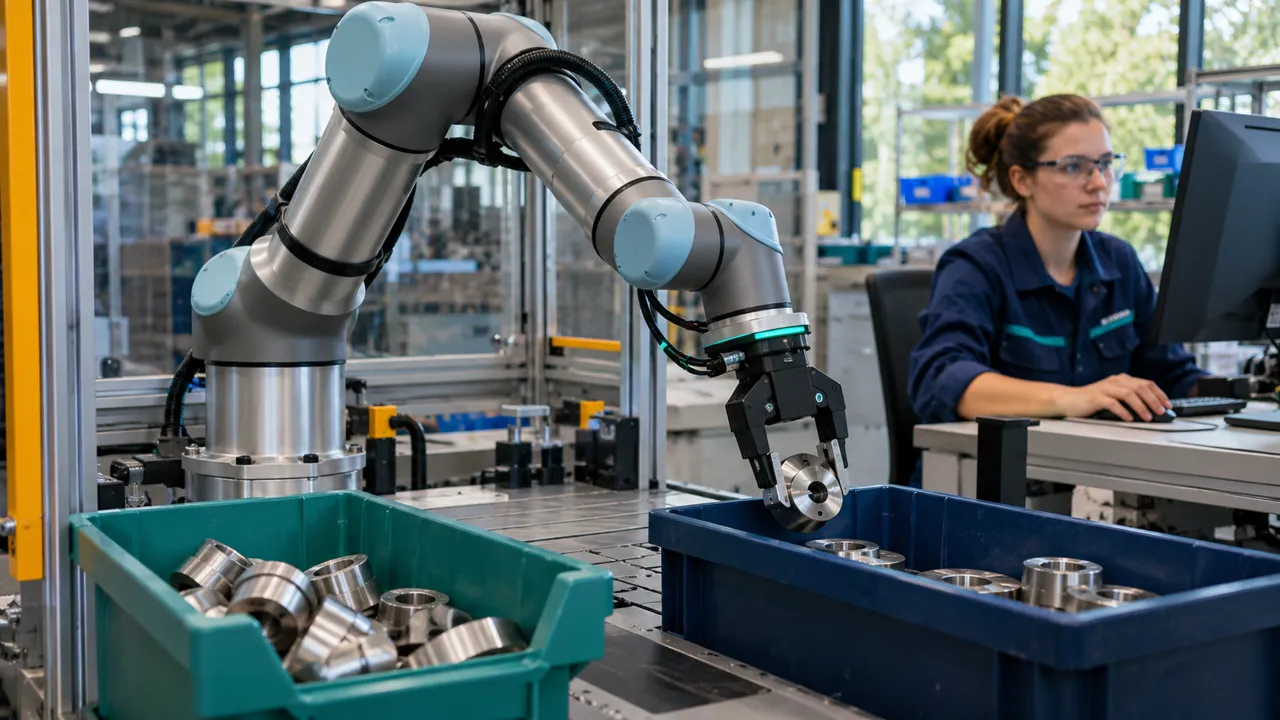
A robot is only one part of an automated workcell. Parts presentation, fixtures, sensing, maintenance access and people moving through the area all affect whether a project is practical.
A practical example
A workshop may want a robot to load a machine. Before selecting reach or payload, record how parts arrive, how their orientation varies and who clears a jam. The unusual situations often determine more of the integration work than the repeated movement itself.
What to check
- Map normal operation, loading, cleaning, fault clearance and maintenance.
- Identify who may enter the work area and under what conditions.
- Use qualified integrators to assess the complete installation and its safeguards.
The trade-off
A demonstration with identical parts in a controlled setting is useful evidence of one capability. It does not show how the same equipment will cope with your site’s variation or establish that a completed workcell is safe.
Research context
OSHA’s technical material on industrial robot systems describes hazards and safeguarding considerations. It is a US workplace reference; site-specific assessment and applicable local requirements still need qualified attention.
Read the original reference material. The practical examples and evaluation questions above are TheTechGlow’s editorial application of the topic, not reported results from a product test.
Explore Robotics for topic coverage, or continue to Artificial Intelligence & Automation for the wider sector.
References and further reading
- osha.govhttps://www.osha.gov/otm/section-4-safety-hazards/chapter-4