A building can collect temperatures, occupancy signals and equipment readings without making its operation easier. Choose one decision that the facilities team needs to improve before adding another data source.
A practical example
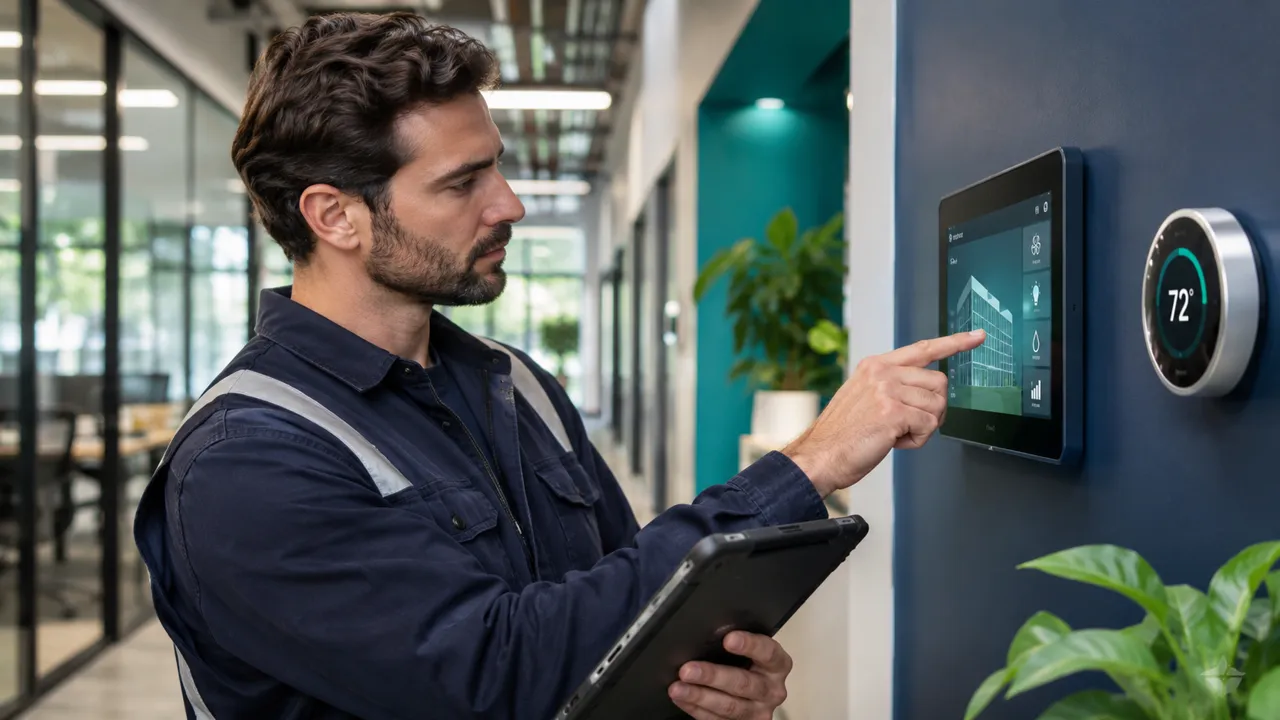
If a meeting room is repeatedly uncomfortable, check where the sensor sits, when the room is used and who can investigate the control settings. A dashboard showing a red room is only the beginning of the diagnostic process.
What to check
- Document the sensor location, measurement interval and maintenance routine.
- Link each actionable alert to a responsible person and a defined response.
- Compare readings with occupancy and operating conditions before changing settings.
The trade-off
More monitoring can reveal useful patterns, but it also creates records someone must interpret. Start with a limited area and an operating question rather than instrumenting the whole building at once.
Research context
US Department of Energy building-controls material describes work on building operation and control technologies. It provides technical context rather than a performance guarantee for a particular installation.
Read the original reference material. The practical examples and evaluation questions above are TheTechGlow’s editorial application of the topic, not reported results from a product test.
Explore Smart Buildings for topic coverage, or continue to Property and Real Estate Technology for the wider sector.
References and further reading
- energy.govhttps://www.energy.gov/cmei/buildings/building-controls