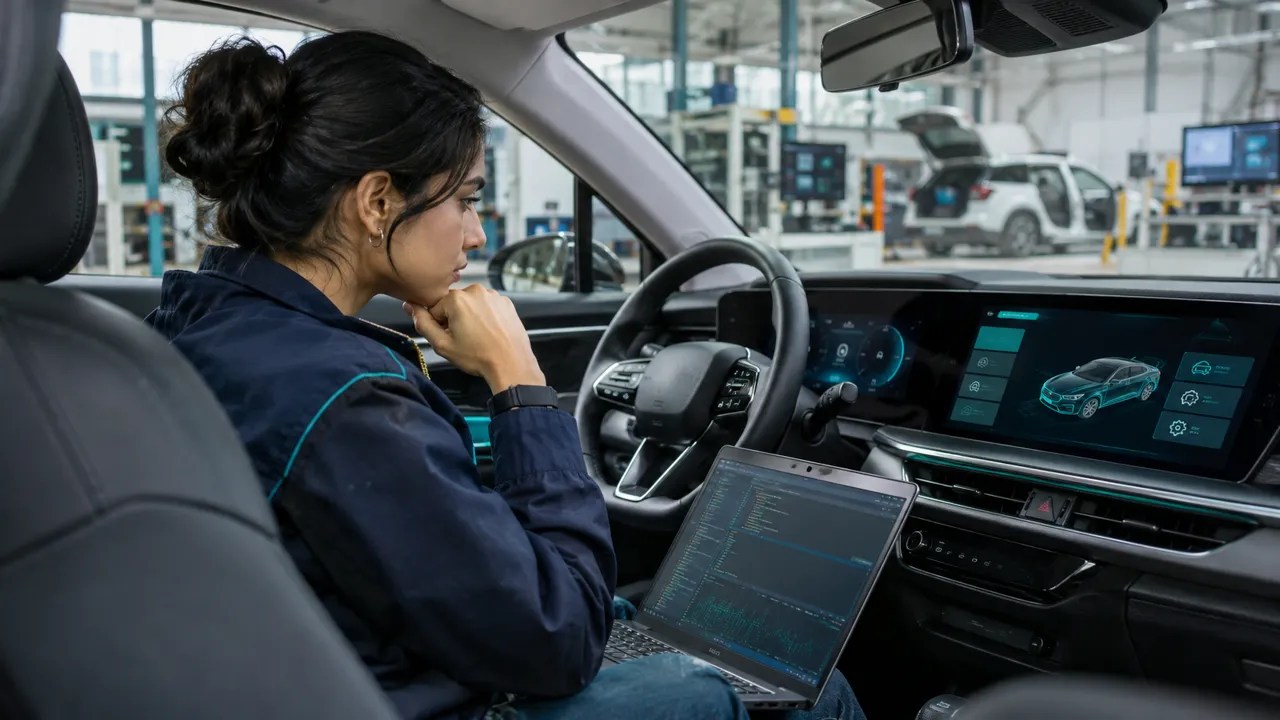
A software-defined vehicle is discussed in terms of capabilities shaped by software and computing architecture. For an owner, the useful questions concern which functions depend on software and how they are maintained.
A practical example
For a proposed purchase, list the functions you expect to keep using. Ask how updates are delivered, whether any features depend on subscriptions and what support information the manufacturer publishes. Read the procedure for an interrupted update rather than assuming every change happens invisibly.
What to check
- Identify which features depend on accounts, connectivity or paid services.
- Read the manufacturer’s update, service and ownership-transfer procedures.
- Keep a record of feature commitments for the exact model and market.
The trade-off
More adaptable software can offer benefits while creating dependencies that continue after purchase. Compare the ownership arrangement, not only the interface demonstrated at a showroom.
Research context
Bosch Mobility describes the software-defined vehicle from an automotive supplier’s perspective. It explains an industry approach, not a guarantee of the features or support in every vehicle.
Read the original reference material. The practical examples and evaluation questions above are TheTechGlow’s editorial application of the topic, not reported results from a product test.
Explore Software-Defined Vehicles for topic coverage, or continue to Consumer and Mobility Technology for the wider sector.
References and further reading
- bosch-mobility.comhttps://www.bosch-mobility.com/en/mobility-topics/software-defined-vehicle/