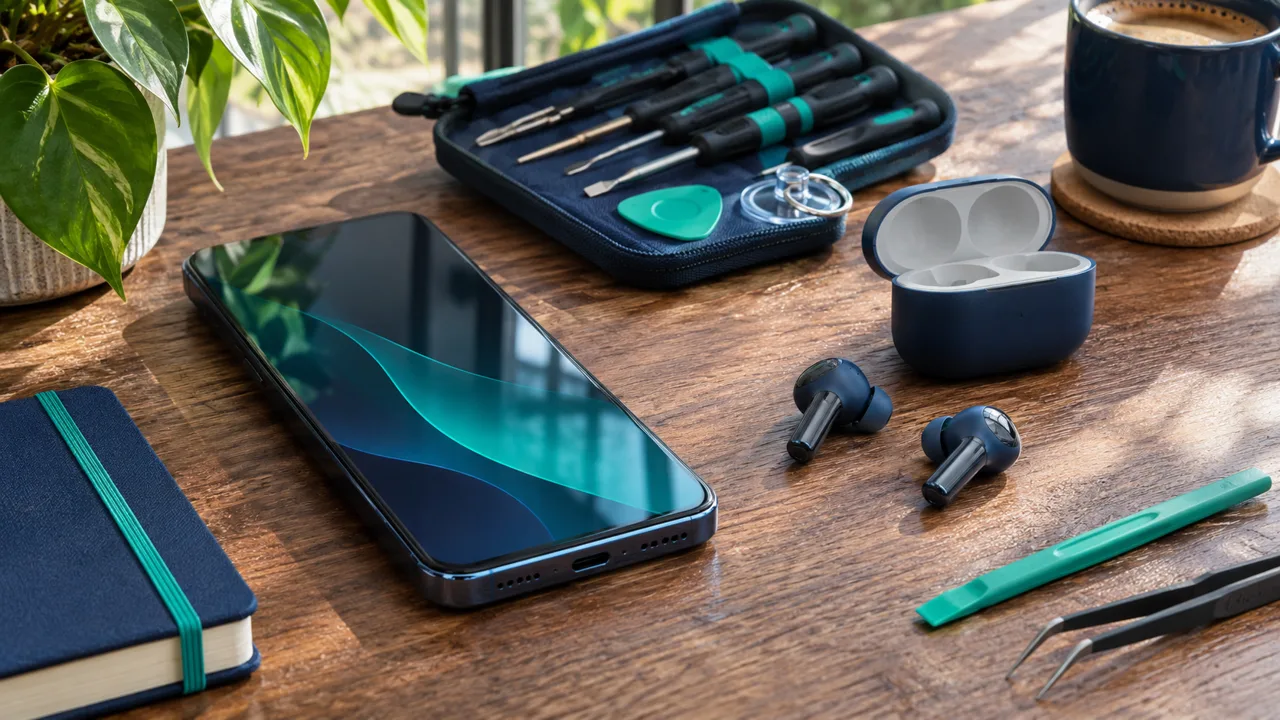
A replacement should address a real limitation. Is the battery worn out, the storage full or an essential app no longer supported? The answer changes what to compare. If a repair would solve the main problem, obtain a reliable estimate before assuming that a new purchase is the only option. Keep security support in that assessment.
Test the ordinary experience
A phone spends much of its life doing familiar tasks: reading, messaging, navigation and taking quick pictures. Compare readability, grip, keyboard comfort and accessibility settings alongside processor specifications. If possible, try the device using the functions you rely on. A specification can describe a component without telling you whether the product suits your routine.
Check support and repair information
Look for the manufacturer’s published update commitment for the exact model and region. Check battery service, screen replacement and access to authorized or otherwise reliable repair. Consider how long you intend to keep the phone. A lower purchase price does not explain what ownership will cost if a common repair is difficult or uneconomic.
Plan the move before buying
Review backup, account recovery and transferring important files. Check whether existing accessories and assistive devices will work. Before passing the old phone to somebody else, follow the manufacturer’s reset and account-removal instructions. A good buying decision includes a safe transition and a realistic plan for the device you already own.
Research context
iFixit advocates access to repair and publishes repair information. It is a useful source for repair questions, while model-specific claims still need the relevant manufacturer documentation and repair evidence. Read the iFixit right-to-repair resources for the source material.
Continue exploring gadgets for related coverage and topic pages.
References and further reading
- iFixit right-to-repair resourceshttps://www.ifixit.com/Right-to-Repair