An indoor-air display is useful only when the household understands what it measures and where the reading comes from. A changing number is not a complete assessment of the room or its occupants’ health.
A practical example
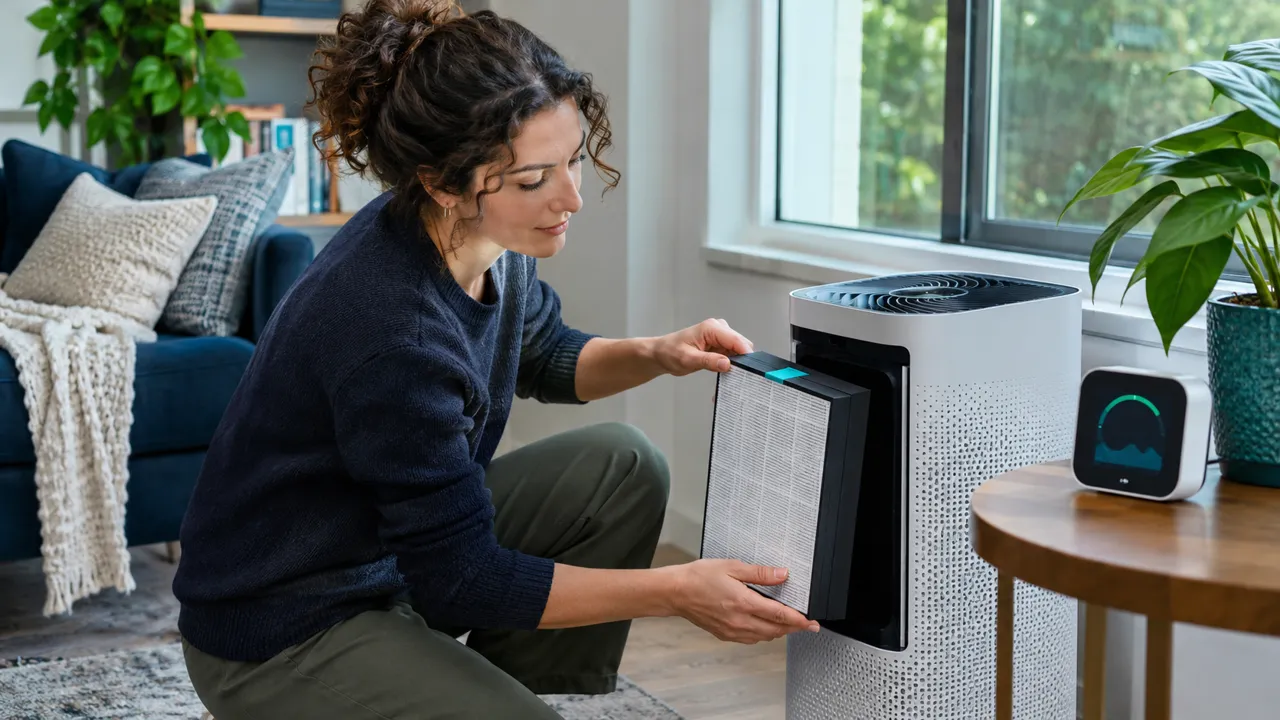
If comparing an air cleaner, begin with the room and the pollutant concern. Read the product information about intended use, appropriate room size and filter replacement. Record where a separate monitor sits, since a reading near an open window may describe a different condition from the rest of the room.
What to check
- Identify what is measured and what the monitor does not detect.
- Check room suitability and filter-care requirements in product documentation.
- Keep ventilation and source-control questions separate from appliance features.
The trade-off
A portable device can address a defined need without solving every indoor-air problem. Avoid treating a dashboard colour or a marketing label as a medical conclusion.
Research context
The US Environmental Protection Agency discusses home air cleaners, filters and their limitations. Its material provides general indoor-air context, not personalized health advice or a guarantee for an individual device.
Read the original reference material. The practical examples and evaluation questions above are TheTechGlow’s editorial application of the topic, not reported results from a product test.
Explore Home Climate & Air for topic coverage, or continue to Home Appliance Technology for the wider sector.
References and further reading
- epa.govhttps://www.epa.gov/indoor-air-quality-iaq/air-cleaners-and-air-filters-home